
Palm Springs Architectural Love Letter: Celebrating Mid-Century Modernism and Its Design Details
- Nora Trentini
- Mar 15, 2025
- 4 min read

Palm Springs is a place where architecture and design come alive in the desert sun. As an architect and interior designer, I find myself drawn not just to the iconic buildings but to the subtle details that reveal a deep, collective design sensibility. This city is a treasure trove of mid-century modernism, a style that feels both timeless and fresh, shaped by its environment and the people who embraced it. Walking through Palm Springs is like stepping into a living gallery where every element, from bold front doors to dry desert gardens, tells a story.
The Iconic Mid-Century Modern Architecture
One of the most striking sights in Palm Springs is a dramatic mid-century building that seems to defy gravity. Imagine a flat steel roof, cantilevered far beyond the walls, floating effortlessly on thin columns. This roof hovers between earth and sky, casting sharp shadows on the desert floor. Behind it, the rugged mountains rise, framing the structure like a natural amphitheater. The building’s openness, with floor-to-ceiling glass walls, blurs the boundary between inside and outside. It’s a perfect harmony of form and function, designed to embrace the desert landscape while offering shelter and cool refuge.

This architectural approach is not just about aesthetics; it’s about responding to the environment with elegance. The thin columns create a sense of lightness, while the steel roof provides shade and protection from the harsh sun. The materials—steel, glass, and stone—are honest and unpretentious, yet they come together to create something extraordinary.
The Zigzag Roofline That Captures the Desert Spirit
Another gem I encountered was a house with an extraordinary zigzag roofline. Multiple sharp triangular peaks rise in a row, resembling a saw blade or a miniature mountain range. This dynamic roofline adds movement and energy to the structure, making it stand out against the flat desert terrain. The house features floor-to-ceiling glass that invites the landscape inside, while a stone base wall grounds the design with natural texture.

A carport framed by tall palms completes the scene, blending the built environment with the desert flora. The zigzag roofline is more than a design flourish; it’s a bold statement that captures the spirit of Palm Springs—modern, daring, and deeply connected to its surroundings.

Bold Front Doors as Statements of Personality
One of the most charming traditions in Palm Springs is the use of bold, single-color front doors set against white or pale stucco walls. These doors are not just entrances; they are declarations of personality and style.

At number 467, a sunshine yellow door shines brightly, flanked by tall columnar cacti that echo its verticality.
Another yellow door at 370 is framed by two giant agave plants, creating a striking contrast between soft stucco and sharp, sculptural greenery.
At 332, a brilliant turquoise double door stands out in front of a garden of golden barrel cacti arranged like sculptures in pale gravel.
A hot pink door with louvered horizontal screens covers the full facade, complemented by pink sculptural columns in the garden that rise like totems.

These doors are joyful pops of color that break the desert’s neutral palette. They invite curiosity and signal the homeowner’s embrace of mid-century modernism’s playful yet refined aesthetic.

The Philosophy of Dry Desert Gardens

Palm Springs’ landscaping is a lesson in beauty and sustainability. The dry gardens here are not an afterthought; they are a carefully crafted extension of the architecture. Gravel, rock, barrel cactus, agave, feather grass, and desert scrub come together in a design language that respects the desert’s scarcity of water.
These gardens are minimalist but rich in texture and form. The golden barrel cacti, arranged like sculptures, create rhythm and balance. Agave plants with their sharp leaves add architectural interest. Feather grass moves gently in the breeze, softening the harder edges of stone and gravel.
This landscaping philosophy is a reminder that beauty does not require excess. It’s about working with nature, not against it, and finding elegance in restraint.

Small Details That Make Palm Springs Magical
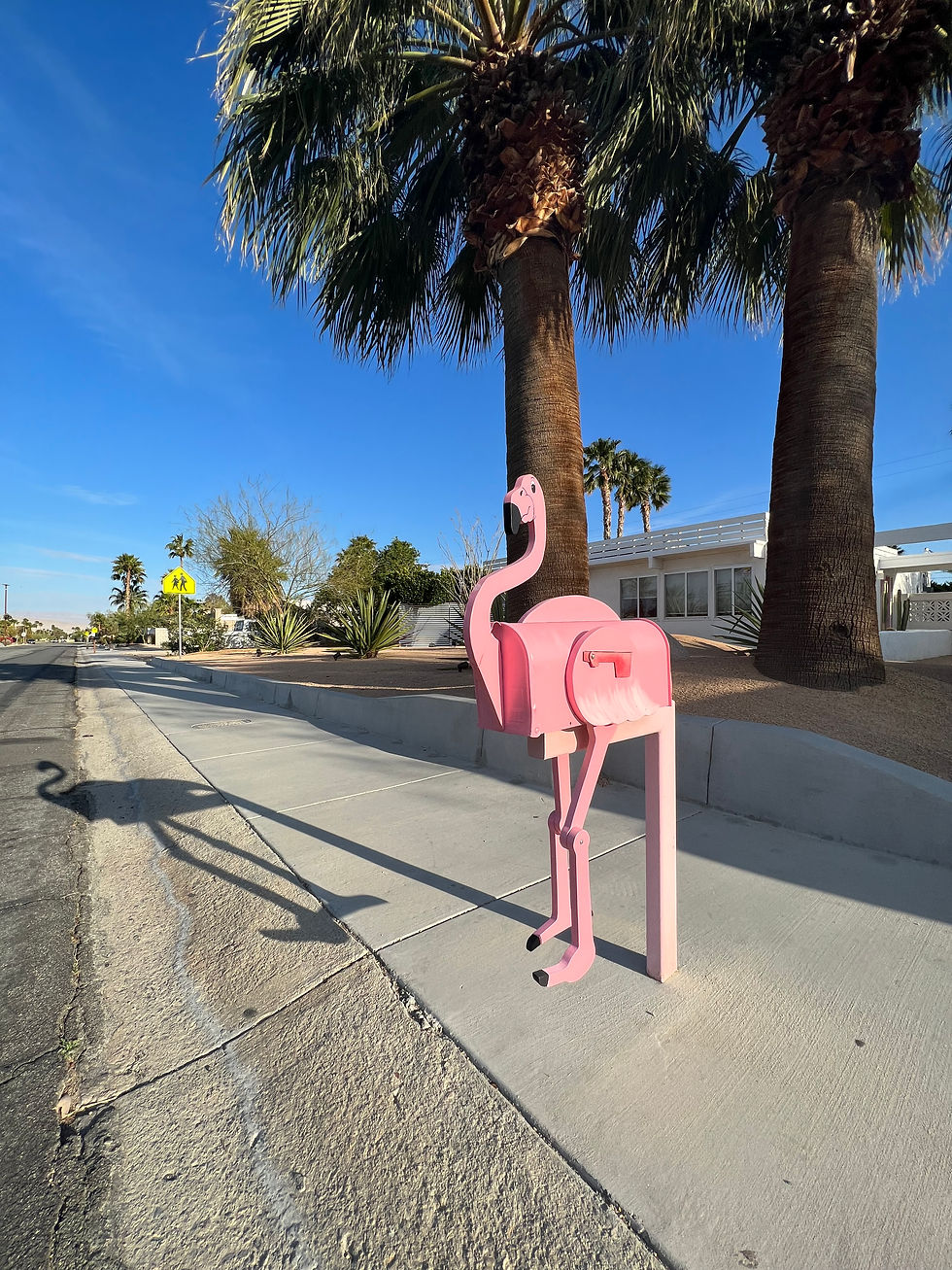
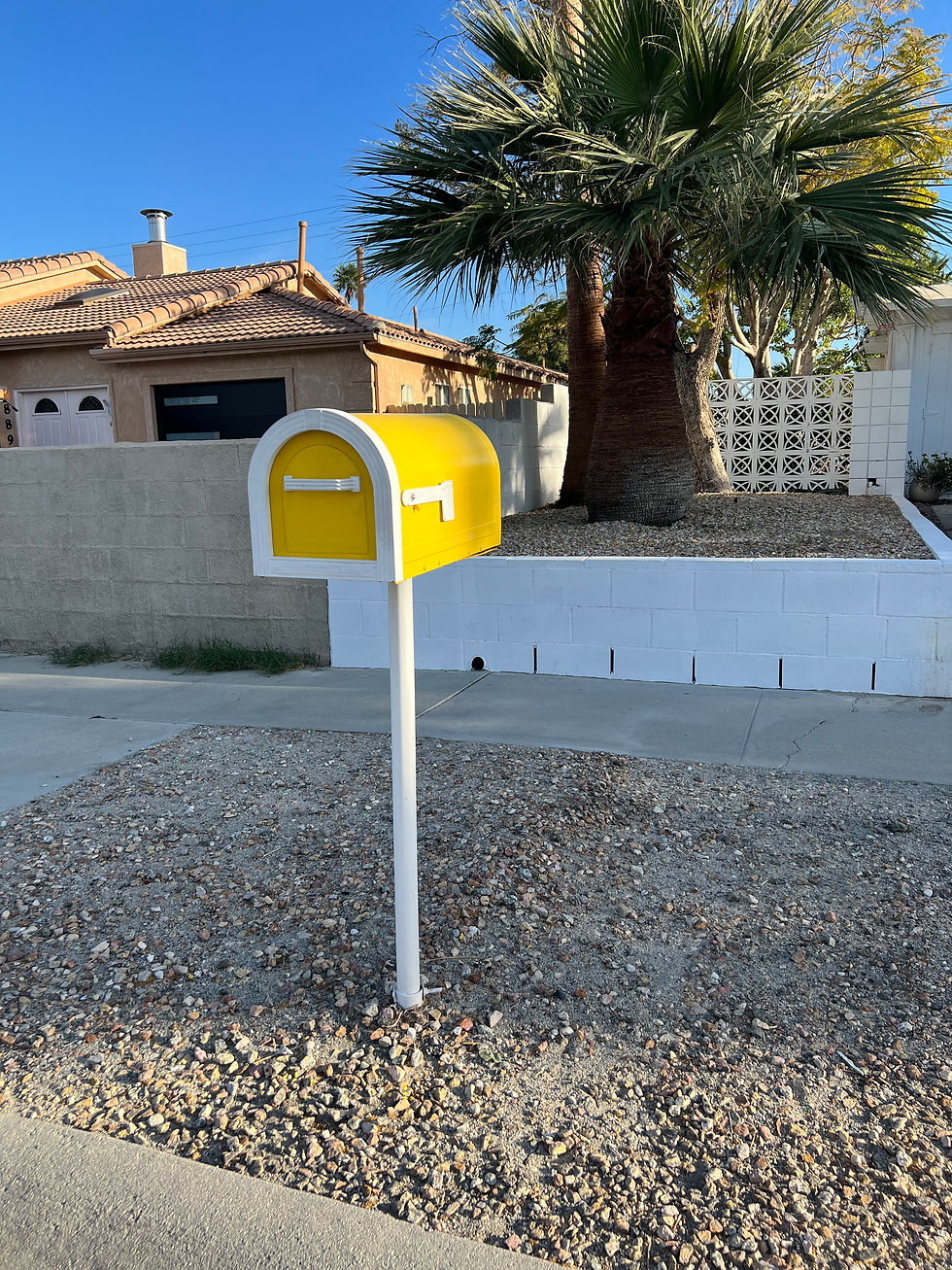
Beyond the architecture and gardens, it’s the small details that make Palm Springs truly magical. The mailboxes here are a perfect example. Unlike the standard utilitarian boxes found elsewhere, Palm Springs mailboxes become miniature statements of personality and identity. Some are painted in bold colors, others shaped with geometric precision, and a few even incorporate sculptural elements that echo the architecture nearby.

These mailboxes show how design permeates every aspect of life here. They are a reminder that good design is not just for grand buildings but for everyday objects that shape our experience.
Embracing a Collective Design Sensibility
What makes Palm Springs special is not just individual buildings or gardens but a shared design language that connects everything. This collective sensibility values clean lines, honest materials, bold colors, and a deep respect for the desert environment. It’s a design culture that celebrates innovation while staying grounded in place.
For anyone who loves mid-century modernism, Palm Springs offers endless inspiration. It’s a place where architecture and landscape come together in a seamless dialogue, where every detail matters, and where design feels like a way of life.


Comments